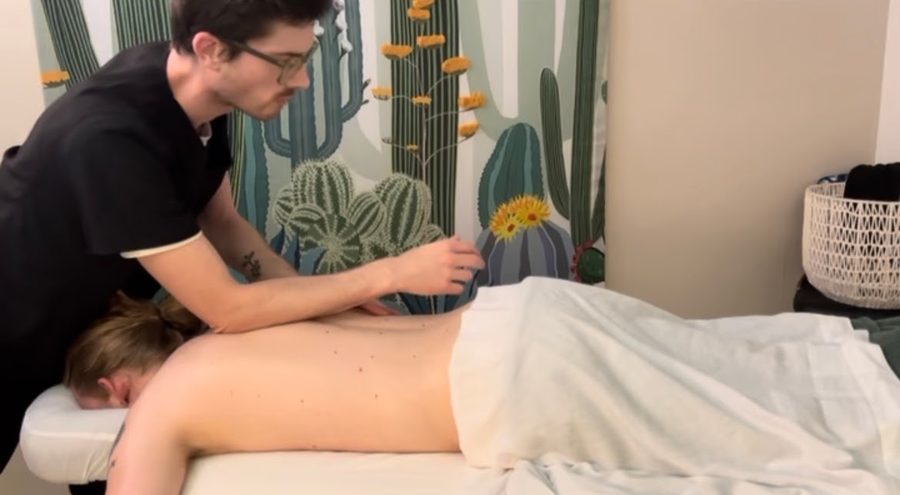
Deep Tissue Massage
Deep Tissue Massage
A slow, intentional approach to deep work. Muscle Mender isn't about pressure for pressure's sake — it's about listening to the body, working with the breath, and releasing tension layer by layer. Whether you're managing chronic pain, recovering from activity, or simply overdue for reset, this is where real change happens.
Every body is different. Muscle Mender offers three distinct approaches so you can choose the style and duration that fits where you are right now. Want to go further? Add the Deep Edge Session to any booking.
Deep tissue at AZS is built on a specific philosophy. We don't push through the body — we work with it. These three ideas shape everything we do.
We always begin at the surface. Warming and softening the outer layers of muscle before moving into deeper tissue allows the body to open rather than brace. This isn't just comfort — it's more effective. Forced depth creates guarding; earned depth creates release.
Breath is the single most powerful tool in a session. An exhale relaxes the nervous system and softens tissue. We'll cue breathing throughout — not as a ritual, but as a real technique for going deeper, reducing discomfort, and keeping you present in your body.
Effective deep tissue uses both compressive (push) and tensional (pull) forces — and applies them with precision. We work specific muscles, not just regions. That means the time is spent where it matters, not spread broadly across the surface.
We read the body continuously — texture, tone, temperature, and response. Every session is an active dialogue, not a script. What we feel informs what we do next.
Good massage doesn't look like hard work. By using body weight, leverage, and positioning rather than muscular effort, we can work deeply and precisely — for your benefit and our longevity as practitioners.
Every muscle group follows the same arc: surface in, deep work, surface out. This respects how the nervous system responds and ensures the tissue is ready to receive depth — then properly settled afterward.
Compression and traction create different kinds of release. Using both together — sometimes simultaneously — addresses muscular holding patterns at multiple levels.
Broad strokes feel good. Specific work changes things. We identify which muscles are involved, where the restrictions are, and go there — not just the surrounding area.
An exhale drops the nervous system, softens the tissue, and brings you home to your body. We use breath deliberately — as technique, not background.
We stay here, with you, for the entire session. No performing, no going through motions. The work demands presence — and so do you.
"So many of us get detached from our bodies and live entirely in our minds. Deep tissue work isn't punishment — it's an invitation back to yourself."— Brant, LMT & Co-Founder
Each session follows a deliberate sequence — building from introduction to deep work to grounding. Here's how a typical Muscle Mender session unfolds.
Muscle Mender draws from the complete range of massage modalities. Which techniques are used — and how — depends entirely on what your body needs in that session.
Long, gliding strokes used to warm tissue, distribute oil, and transition between areas. The primary tool for opening and closing each region.
Kneading and wringing movements that lift, compress, and roll the tissue — improving circulation and beginning to address deeper layers.
Cross-fiber or circular pressure applied to specific points or adhesions. Essential for breaking up scar tissue and releasing deep restrictions.
Fine oscillating movements that reach deep into muscle tissue and the nervous system — releasing held patterns that compression alone can't access.
Rhythmic percussion that stimulates the nervous system and increases circulation. Used to invigorate or transition between phases of deeper work.
Sustained or rhythmic pressure directly into muscle belly — useful for broad release before going specific, and for warming deeper structures.
Active or passive lengthening of muscle and connective tissue. Often used in conjunction with other techniques to restore functional range of motion.
Placing the body in a position of ease to resolve painful trigger points without the addition of pressure or force. Particularly effective for acute tension.
A neuromuscular technique: the client briefly contracts a muscle isometrically, then fully relaxes — allowing the therapist to achieve greater depth and range.
Sustained, precise pressure applied to hyperactive nodules in the muscle — the "knots" that refer pain and restrict movement. Often the most dramatically effective part of a session.
Many of the most effective moments in a session come from blending methods simultaneously — compression with stretch, friction with breath-guided release, or vibration into a trigger point.
Not just temporary relief — addressing the source of chronic tension means the change sticks. Regular deep tissue work can interrupt cycles of chronic pain that stretch and foam rolling alone can't reach.
Adhesions, trigger points, and fascial restrictions all limit range of motion. By releasing these systematically, movement becomes easier and more fluid — often noticeably so within hours of a session.
Deep tissue work increases circulation, reduces inflammation markers, and speeds the clearance of metabolic waste from muscle tissue. Essential for athletes, those in physical professions, or anyone in a recovery phase.
Chronic muscular tension keeps the nervous system in low-grade activation. As the tissue releases, the nervous system follows. Most clients notice a deep, restful calm that differs qualitatively from relaxation massage.
Muscles that have been shortened by years of habitual posture can be lengthened. Over a series of sessions, structural changes become visible — shoulders drop, the neck lengthens, breathing deepens.
Perhaps the most underrated benefit. Many people are genuinely disconnected from their bodies — running on autopilot. Deep tissue work invites presence and proprioceptive awareness that carries into daily life.
Deep tissue work is appropriate for most people — but the right fit matters. Here's how we think about client types and a few things to know before you book.
The honest answer: it depends on where you are. We think in phases, not a one-size-fits-all schedule. Here's how we typically guide clients.
If you're dealing with significant, limiting pain — pain that affects how you sleep, move, or function — more frequent sessions build on each other. The tissue needs repeated input to shift out of holding patterns it may have maintained for months or years.
Recommended: Every 1–2 weeksYou're not in significant pain, but you feel the accumulation — tightness, fatigue, limited range. This is the most common place people find themselves. Regular sessions at this interval maintain progress and prevent regression back into acute patterns.
Recommended: Every 3–4 weeksYou feel good. You want to stay that way. Maintenance sessions are about continuing to invest in your body before issues develop — not waiting until something hurts. The bodies that feel best long-term are the ones that receive consistent, intentional care.
Recommended: Every 4–6 weeksTool-assisted soft tissue work layered into your Muscle Mender. This isn't a separate service — it's a precision upgrade that goes where hands can't. Ideal for athletes, chronic tension, and anyone who has hit a plateau with regular massage.
The Deep Edge Session uses weighted stainless steel instruments to work through fascial layers, break up adhesions, and stimulate tissue remodeling. The tools glide, sweep, and chisel across muscles with a precision no elbow or thumb can replicate — creating a different kind of release that complements and amplifies everything done in your Muscle Mender session. Think of it as the edge your deep tissue was missing.
Long strokes across the muscle belly to warm tissue, stimulate circulation, and begin surface-to-deep release.
Perpendicular strokes that break adhesions and scar tissue along and across the muscle grain — particularly effective for chronic tension bands.
Broad dispersal strokes that address larger surface areas, improving lymphatic flow and preparing fascia for deeper work.
Targeted pressure used to separate fascial layers and address deep-seated restrictions at specific sites of holding.
Fine oscillating movement delivered through the tool to reach the nervous system and release patterns that static pressure can't access.
"Hands do the listening. Tools do the work hands can't."— Awaken Zen Spa
Deep Edge works within your scheduled session time — not added on top of it. Your therapist weaves instrument-assisted work directly into your Muscle Mender, replacing a portion of hands-on time with targeted tool work where it'll have the most impact. No extra time needed. Just better results.
Book with Deep EdgeThere are good options in Mesa. Here's an honest look at how Muscle Mender at AZS compares to what else is out there — big chains and local independents alike. We're not the right fit for everyone, and we'd rather you know that upfront.
| What Matters | You're here Awaken Zen Spa Boutique · Mesa | Resilience Massage Independent · Same Building | Massage Envy National Chain · Mesa | Hand & Stone National Chain · Gilbert |
|---|---|---|---|---|
| Who performs your session | Owner-operated boutiqueSmall team; deep investment in every client outcome | Staff therapistMultiple therapists on rotation | Staff therapistAssigned at booking; consistency varies | Staff therapistAssigned at booking; consistency varies |
| Membership option | $69/month1 hr massage or facial — no restrictions, no catch | No membershipPay per session; Groupon available | ~$70–80/monthCredits roll over; cancellation fees apply | ~$70–80/monthIntroductory pricing; contract terms vary |
| Deep tissue approach | Structural & specificBreath-guided, technique-layered, anatomy-informed | Sports & therapeutic focusStrong reputation for clinical work | Standard deep tissueQuality varies by therapist | Standard deep tissueQuality varies by therapist |
| Session feel | Private suite, spa-levelQuiet, unhurried, no lobby traffic | Clinical / activeMovement & recovery-oriented atmosphere | High-volume clinicBusy front desk, shorter transitions | High-volume clinicMembership model; sales focus at checkout |
| Booking model | Appointment onlyYour session, your time — undivided | Appointment + walk-inMore flexibility, open 7 days | Membership encouragedMonthly subscription model; credits roll over | Membership encouragedMonthly subscription; intro pricing available |
| Services beyond massage | Full facial menuTrevor, LE — acne, microneedling, anti-aging, advanced | Massage onlyNo esthetics services offered | Basic facials + stretchEnhancements available; limited scope | Facials + add-onsBroader menu; varies by location |
| Pricing (60 min deep tissue) | $85 / $69 with membershipMembership covers massage or facial — your choice each month | ~$80–100Groupon available; standard pricing | ~$70–90 member / $120+ non-memberNon-member rates are significantly higher | ~$70–90 member / $115+ non-memberIntroductory rates available for new clients |
| Google rating | 5.0 ★ (57 reviews)100% 5-star; every review verified | 4.9 ★ (384 reviews)Highest review volume in the area | 4.6–4.7 ★ (485–741 reviews)Consistent across locations | 4.2 ★ (279 reviews)Mixed feedback on consistency |
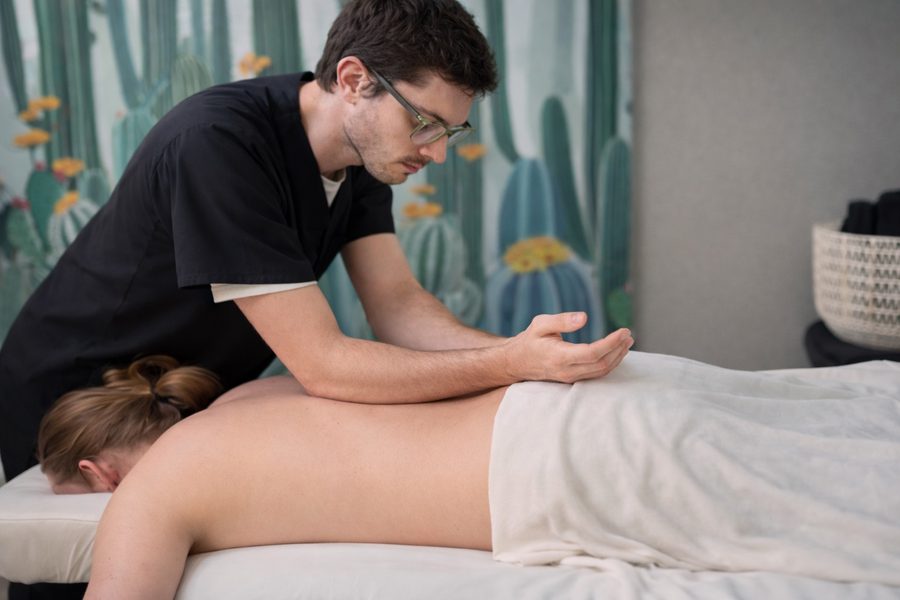
A quiet suite in Mesa designed for one thing: your complete undivided session. No lobby bustle, no background noise. Just you and the work.
Real words from people who've been on the table. We'll let them speak.
“One of the best massages I've had. My shoulder feels so much better, and the pressure and technique were exactly what I needed.”
“Brant exceeded expectations. The pressure was just right, he was thorough, and the whole experience felt relaxing, knowledgeable, and genuinely high quality.”
“Brant found the perfect sweet spot of pressure to release the knots in my back and adjusted the session exactly how I wanted.”
Reviews selected for Muscle Mender emphasis: deep pressure, knot release, shoulder relief, and overall session quality.
Appointments fill up — especially for deep tissue. Book online now, or reach out if you have questions about which session is right for you.