Services Products About Contact Gift Cards Blog Book Now
Cupping Therapy · TCM & Modern

Restorative
Cupping

Decompression. Circulation. Release.

Two thousand years of cupping tradition meeting modern therapeutic practice. Negative pressure lifts tissue away from underlying structures — creating space, drawing fresh circulation, and releasing what compression alone cannot reach. Choose classical TCM or contemporary fascia-focused work, or let us blend both.
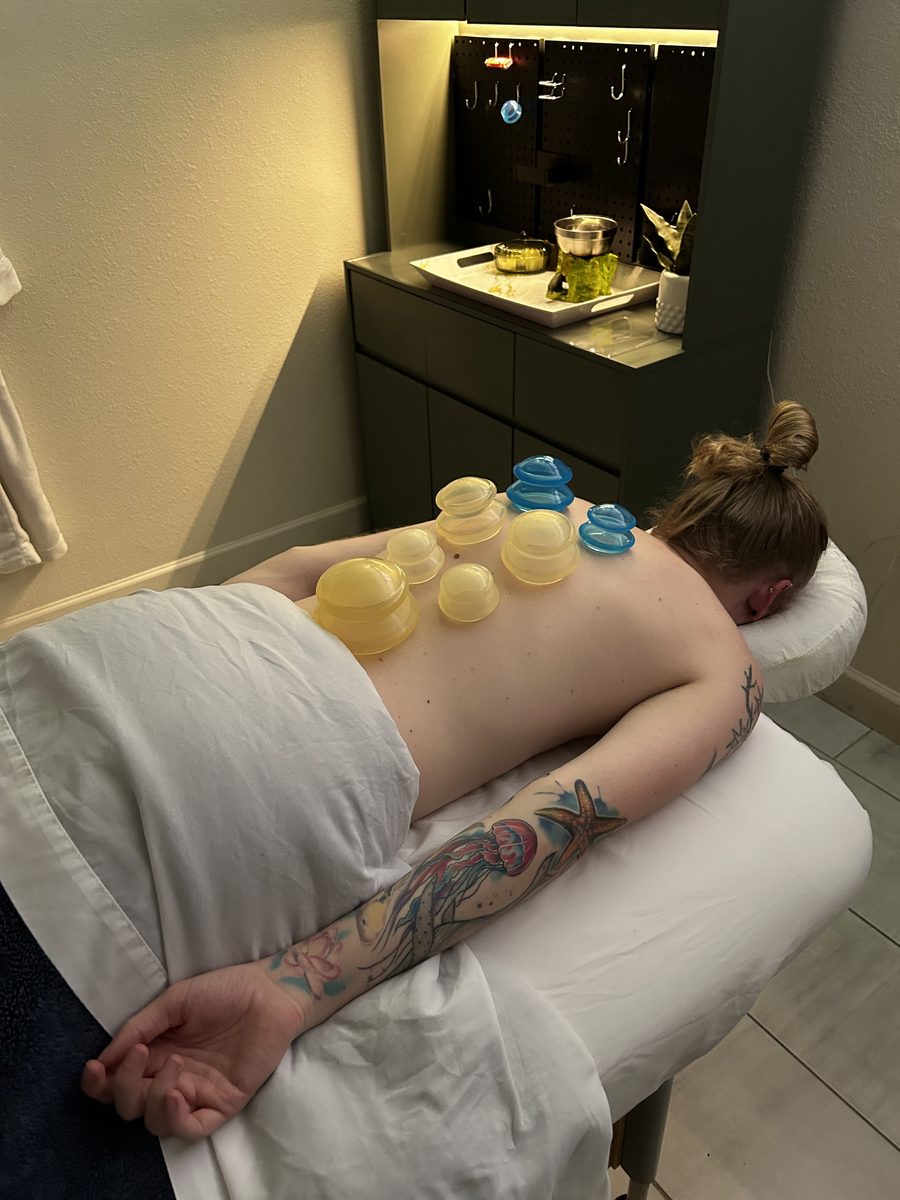
Restorative Cupping Experience at Awaken Zen Spa
Starting at
$130

Pressure in Reverse

Every other manual therapy works by pressing down into tissue. Cupping does the opposite — it lifts. That single mechanical difference unlocks therapeutic effects that hands, elbows, and tools cannot replicate. Here are the three ideas at the core of the work.

01
Decompression Opens What Compression Cannot

Suction lifts the skin, fascia, and superficial muscle layers away from deeper structures — separating tissue planes that have been compressed together through injury, posture, or chronic holding. This fascial lift creates space where there was none, and draws fresh circulation into areas that had been starved of it.

02
Stagnation Drawn to the Surface

In TCM, cupping draws stagnant Qi and Blood upward for clearance. In modern terms, the negative pressure pulls metabolic waste and old blood from congested tissue to the surface where the lymphatic system can remove it. The marks left behind are diagnostic — their color tells us exactly what was held in the tissue.

03
Fresh Circulation Floods In

When the cup is removed, a rush of freshly oxygenated blood fills the cleared space. This is where the healing begins — not during the cupping itself, but in the moment after. Clients often feel a wave of warmth spreading through the area as circulation returns. The tissue has been invited to restore itself.

Choose Your Format

The Restorative Cupping Experience is offered as a dedicated cupping session or seamlessly blended into a full deep tissue massage. Both options deliver the complete cupping protocol — the difference is scope and depth of total bodywork.

Standalone Session
Cupping Focus Session

Dedicated cupping work from start to finish. We open with light effleurage to warm the tissue, then move into a full protocol — stationary, gliding, and dynamic techniques as indicated — closing with integration work. Ideal if cupping is your primary goal and you want maximum therapeutic time with the cups.

60 minutes$130
Integrated Session
Deep Tissue + Cupping Blend

A full deep tissue massage with 30 minutes of cupping protocol woven in. The cups open and prepare tissue that the hands then work more deeply — decompression followed by compression, in sequence. This combination produces results that neither modality achieves alone and is our most requested cupping format.

90 minutes total$160

The Philosophy Behind the Cups

01
Decompression First

Before we can work deeply, we need to create space. Cupping's lifting action separates fascial layers and brings fresh blood to congested tissue — so that everything done afterward lands in a more receptive, open environment. We decompress before we compress.

02
Read the Marks

The color and pattern of cupping marks are information, not side effects. Light pink means good circulation and minimal stagnation. Dark purple means long-held stagnation. Gray or brown signals cold and damp. We read what the tissue is telling us and adjust the session accordingly.

03
Channel Awareness

In TCM cupping, placement is not anatomical — it's meridian-based. Cups go where the channel calls for intervention. This is why clients sometimes feel the effects of cupping in areas far from where the cups were placed. The channels connect.

04
Technique to Tissue

Not every area calls for stationary retention. Gliding cups work fascial lines in motion. Flash cupping stimulates without prolonged hold. Dynamic techniques layer movement into the suction. We select the technique the tissue is asking for — not a one-size protocol.

05
Integration After Release

When tissue releases, it needs to be settled. We close every cupping session with integration work — light effleurage, breath, and stillness — so the nervous system can register what changed and the body can complete the process it's been invited into.

"The cups do not heal. They reveal — and create the conditions for the body to complete the work."
— Cupping Therapy Principle

What to Expect

A Restorative Cupping session moves through distinct phases — each one preparing the tissue for what comes next. Here's the arc of a typical 60-minute standalone session.

01
Intake & Assessment

Review your goals, history, and any relevant patterns

02
Tissue Warm-Up

Light effleurage to prepare the tissue for suction

03
Stationary Cups

Cups placed and held on key points and channels

04
Gliding & Dynamic Work

Cups moved along fascial lines and muscle groups

05
Mark Reading

Color and pattern assessed; technique adjusted as needed

06
Integration & Close

Light effleurage and stillness to settle the system

The Full Toolkit

Cupping is not a single technique — it's a modality with a broad range of application methods. Each has a distinct purpose, sensation quality, and therapeutic effect. Here's what may be drawn from in your session.

Stationary Retention

Cups placed and held for 5–15 minutes on specific points or regions. The classical TCM method — sustained suction that draws deeply into the channel and produces the characteristic marks. Most effective for significant stagnation, cold, and damp patterns.

Gliding Cupping

Oil applied to the skin before cups are moved in long, flowing strokes along fascial lines and muscle groups. Produces a deep myofascial release effect similar to instrument-assisted work — without the compression. Rarely marks the skin.

Flash Cupping

Rapid placement and removal in quick succession over a region — stimulating circulation, awakening the nervous system, and dispersing superficial stagnation. Often used as an opening technique or to invigorate sluggish tissue before deeper work.

Dynamic Cupping

Active or passive movement applied while cups are in place — joint mobilization, stretching, or breath work during suction. Creates multidirectional fascial release and extends the therapeutic effect into the surrounding connective tissue.

Point-Specific Cupping

Cups placed precisely over acupoints rather than broad muscle regions — for example, BL 17 for Blood stagnation or BL 23 for lower back cold patterns. The placement is therapeutic and meridian-informed, not purely anatomical.

Light Retention

Stationary cups applied with lower suction pressure for shorter holds. Used over sensitive areas, bony prominences, or for clients new to cupping. Achieves decompression and fascial lift with minimal marking and a gentler overall experience.

What Changes After
Cupping

Releases Deep Fascial Restriction

Cupping lifts tissue planes that compression cannot separate. Adhesions between fascial layers — built up through injury, repetitive stress, or chronic posture — are addressed in a way that is simply not possible with downward pressure alone.

Dramatically Increases Local Circulation

The negative pressure pulls blood into tissue that had been poorly perfused — delivering fresh oxygen and nutrients while clearing metabolic waste. The rush of circulation after cup removal is one of the most powerful therapeutic moments in manual therapy.

Reduces Chronic Pain & Muscular Tension

Both the decompressive lift and the resulting circulation increase have significant analgesic effects. Many clients report relief from long-standing pain patterns — particularly in the upper back, neck, and shoulders — that has lasted well beyond the session itself.

Supports Lymphatic Drainage

Cupping's lifting action directly stimulates the superficial lymphatic vessels, encouraging the movement of lymph through areas that the body's own drainage system struggles to reach. Particularly effective for chronic inflammation, puffiness, and post-injury swelling.

Clears Stagnation — Physical & Energetic

In TCM, stagnation is the root of most pain — where flow ceases, dysfunction follows. Cupping is one of the most direct interventions for moving both Qi and Blood. Clients often describe a profound sense of release — lighter, clearer, and more at ease than when they arrived.

Decompression reaches where pressure cannot.
2,000+
years of cupping practice across TCM, Middle Eastern, and Egyptian traditions
3–7
days for cupping marks to fully resolve — they are not bruises
6
distinct cupping techniques drawn from in a single session

Why the Tool Matters

The type of cup used changes the sensation quality, the level of suction, the technique possible, and the clinical effect. We work with multiple cup types — selecting based on what the tissue and the session require.

What Makes Cupping Different

Every other manual therapy applies force downward into tissue — compression. Cupping applies force upward — decompression. This reversal creates a fundamentally different tissue response: fascial planes separate, blood is drawn into congested areas, and the nervous system receives a novel stimulus it hasn't experienced from compression-based work. For clients who have plateaued with traditional massage, cupping often produces results that nothing else has.

Silicone Cups

Flexible, squeezable cups that create suction without fire. Excellent for gliding and dynamic techniques — easy to move along fascial lines, highly controllable suction, and ideal for clients new to cupping.

Plastic Pump Cups

Precision suction via a hand pump allows exact, repeatable pressure levels across a session. Preferred for stationary retention work where consistent suction depth is important — particularly for point-specific TCM applications.

Fire Cups (Glass)

The traditional TCM method — a flame briefly introduced into a glass cup creates suction as it cools against the skin. Produces warmth that penetrates into the channel and is particularly effective for cold and damp patterns.

Small-Diameter Cups

Narrow cups for the neck and areas around joints where standard cups cannot fit. Used for lymphatic drainage work and in joint work around the knees, elbows, and shoulder capsule.

"The marks are not damage — they are evidence. The tissue is telling you exactly what it was holding."
— Awaken Zen Spa Therapist
About Cupping Marks

Cupping marks are among the most misunderstood aspects of the therapy. They are not bruises — bruising results from impact trauma that breaks capillaries. Cupping marks result from suction drawing blood to the surface from congested tissue below. Light pink or no mark indicates good circulation and minimal stagnation. Dark purple or near-black marks indicate significant stagnation that has often been present for months or years. Marks typically resolve fully in 3–7 days. Many clients come to see the marks as welcomed information rather than something to be concerned about.

Is Cupping Right for You?

Cupping is well-suited to a broad range of clients and conditions. Here's how we think about who benefits most from this service — and a few situations to be aware of before you book.

Who Thrives With This Service
  • People with chronic pain or tension that hasn't fully responded to traditional massage
  • Athletes managing recovery, inflammation, and range-of-motion restriction
  • Anyone dealing with fascial adhesions or post-injury scar tissue buildup
  • Clients experiencing cold, heavy, or stiff sensations — particularly in the back and limbs
  • Those seeking lymphatic drainage support or help with chronic inflammation
  • Anyone curious about TCM-based bodywork and meridian-informed therapy
  • People who have plateaued with compression-based massage and want something that works differently
  • Desk workers with accumulated upper back, neck, and shoulder stagnation
Special Situations
  • First time with cupping: We'll walk you through what to expect and start conservatively to let you find your comfort level
  • Visible marks concern: We can use lighter suction and shorter holds to minimize marking — let us know at booking
  • Skin sensitivity: Silicone cups and reduced suction make cupping accessible for most sensitive skin types
  • Post-surgery: We work around surgical sites with appropriate clearance from your provider
  • Pregnancy: Modified cupping is available — please contact us to discuss your situation
Contraindications — Please Contact Us First
  • Active fever, infection, or contagious skin conditions
  • Blood clots (DVT) or active history of thrombosis
  • Bleeding disorders or clients on blood thinners
  • Active inflammatory skin conditions over work areas
  • Varicose veins or fragile, easily-damaged skin
  • Active cancer in the region — please consult your oncologist

When Should You Come Back?

Cupping works cumulatively — each session builds on the last as tissue progressively clears and opens. Here's how we guide most clients through their care plan based on where they are.

Phase 01
Active Pain & Significant Stagnation

If you're dealing with pain, chronic stiffness, or tissue that has clearly been congested for some time, more frequent sessions allow the work to build momentum. Stagnation accumulated over months or years requires repeated therapeutic input to fully clear — one session initiates the process, regular sessions complete it.

Recommended: Every 1–2 weeks
Phase 02
Moderate Tension & Accumulated Stress

You feel the buildup — tightness, fatigue, limited range of motion, or a general sense of congestion in the tissue. You're not in significant pain, but something needs to move. Regular cupping at this interval keeps the tissue clear and prevents deeper stagnation from re-establishing.

Recommended: Every 3–4 weeks
Phase 03
Maintenance & Prevention

You feel good and you want to stay that way. Maintenance cupping is about continued investment in your tissue before problems develop — not waiting until something hurts. The people who feel best long-term receive consistent, intentional care before they need it.

Recommended: Every 4–6 weeks

Where the Work Happens

A quiet suite designed for unhurried, focused work. No lobby noise, no transitions. Just the session.

Treatment Room
Session in Progress
Cups & Tools
Entrance / Ambiance

What Clients Say

Real words from people who've experienced the Restorative Cupping Experience. We'll let them speak.

"Your client quote goes here — what surprised them, what shifted in their body, how long the results lasted, or what they noticed in the days after."

— Client Name · Restorative Cupping

"Your client quote goes here — what surprised them, what shifted in their body, how long the results lasted, or what they noticed in the days after."

— Client Name · Restorative Cupping

"Your client quote goes here — what surprised them, what shifted in their body, how long the results lasted, or what they noticed in the days after."

— Client Name · Restorative Cupping

Replace placeholders with real client reviews — Google Reviews, direct quotes, or anything clients have shared with you.

Ready to Experience
What Cupping Can Do?

The Restorative Cupping Experience is one of our most distinctive services — and one of the most consistently surprising for clients who've never tried it. Reserve your session online, or reach out if you have questions about which format is right for where you are.

Book Cupping Session Give as a Gift